
Whether you’re setting up your first pedalboard or are on your hundredth iteration, narrowing down which pedals to put on your board is always a challenge. From distortions and overdrives to delays, reverbs, and many more, choosing your favorite types of effects is only half the battle. You’ll also need to decide whether you want your guitar pedals to be analog or digital.
The conversation around analog vs. digital guitar pedals is a complicated one, but the differences almost always come down to the feel, tone, and flexibility each type offers. There really is no universal right answer here. It’s all about the tone you want to produce and meeting your needs as a player. Here is everything you need to know.
The main difference between digital and analog pedals is how they shape the audio signal you send through them. With analog pedals, your guitar signal stays fully analog from input to output, passing through physical components like transistors, resistors, and capacitors.
That direct path creates an immediate response. When you play, the pedal reacts in real time without having to make any complex conversions. This is why analog drives, fuzzes, and compressors, in particular, often feel warmer and more connected to your playing.
Unlike analog pedals, digital guitar pedals start by turning your analog signal into digital data, which it then converts back into an audio signal that it can send further down the pedal chain. This process allows for much more precise control over your tone.
The key difference comes down to how the pedal handles your signal internally. Instead of physical circuits shaping your tone, digital pedals rely on programmed processing.
The difference in feel between analog and digital guitar pedals is clear as soon as you start playing. Analog pedals react instantly to your touch because they create a direct connection between your playing and the sound.
Digital pedals can feel a bit different depending on how they process the signal. Though most modern designs are highly responsive and have minimal latency, some players still notice a difference in overall feel and responsiveness.
Still, this difference isn’t something that is necessarily positive or negative. It almost always comes down to personal preference.
In the discussion around digital vs analog guitar pedals, tone is where opinions start to split. Analog pedals tend to add more character, warmth, and coloration that shape your sound in a noticeable and unique way.
Digital pedals tend to focus more on clarity and predictability. They reproduce effects with pinpoint precision, making them incredibly useful if you want to produce a uniform signal no matter the circumstances.
Again, it’s all about personal preference here. Both approaches can sound amazing when you use them in the right context.
Analog pedals vary a lot more from one unit to another because even the smallest difference in a physical component can make noticeable differences in tone. Though this may seem like a negative, a lot of players really enjoy this variation because it makes each pedal feel more unique.
Digital pedals are much better at delivering consistent performance every time. Presets always sound the same from one session to the next, making them more reliable and predictable from a pure tone perspective.
Regardless of the subtle differences, both types of guitar pedals can be equally reliable, as long as you power and arrange them properly.
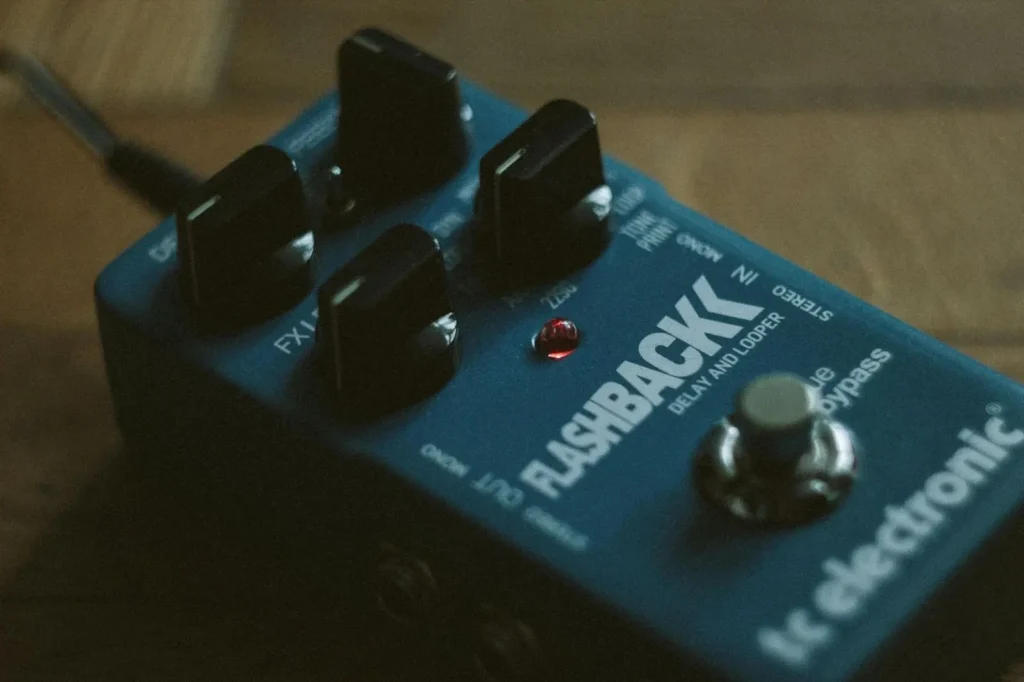
The debate around analog delay vs digital delay effects is particularly fierce and highlights one of the clearest differences between the two approaches. Analog delay uses physical bucket brigade circuits that gradually degrade the repeated signal over time.
This creates darker, more natural-sounding echoes that seamlessly blend into your tone instead of sticking out or sounding too artificial.
Digital delay offers cleaner and more precise repeats with far more precise control. With digital delays, you can fiddle around with even longer delay times, tap tempo, and detailed adjustments.
Digital delays don’t naturally degrade the echo over time, making them ideal when you need clarity and timing accuracy above all else. They’re often used for rhythmic playing or layered soundscapes and can even create more electronic, glitchy sounds that further increase the sonic possibilities.
The good news is that you don’t need to make a final decision about whether you think digital or analog pedals are the superior option. In fact, most real-world pedalboard setups feature a mix of both analog and digital pedals.
It’s all about experimenting and finding out which options you like best. However, if you’re looking for a definitive answer, choosing analog for drives and other core tone shaping effects and digital pedals for time-based and modulation effects is a great way to take advantage of the unique benefits that both types of pedals offer.
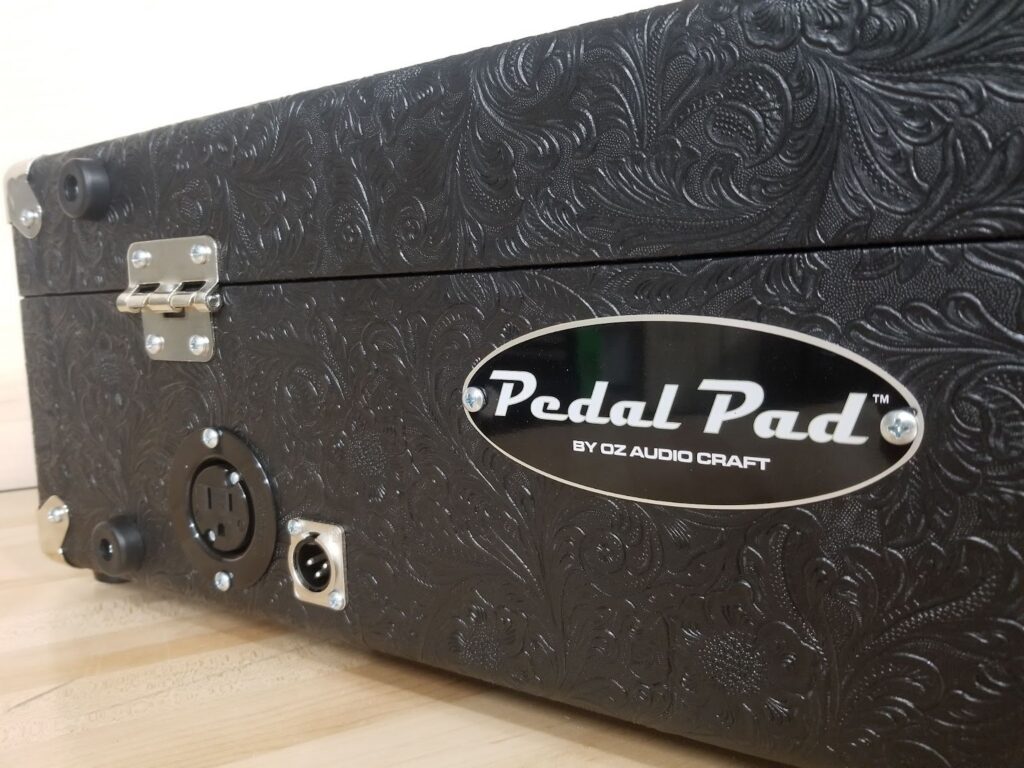
Though the analog vs. digital guitar pedals debate doesn’t have a single right answer, when it comes to the pedalboard you put them on, the only right answer is Pedal Pad.
Our team specializes in handcrafting one-of-a-kind custom pedalboards for guitar players just like you. Made from the highest quality Baltic birch wood and offering an almost endless list of optional features like built-in power switches, audio ins/outs, and more, if you have an idea for a pedalboard, you can trust us to bring it to life.
Don’t settle for some boring old mass-produced board when you could have something so much better. Contact Pedal Pad and start designing your new dream pedalboard today.