
Compression isn’t the flashiest guitar effect out there, but it’s still an essential part of a pro’s rig.
The consistent dynamics, controlled sustain, and predictable feel that these pedals provide are all essentials that seasoned guitar players simply can’t ignore.
But with so many options out there, how can you possibly decide which type of compressor pedal is best for you?
Every guitar player is different, and the compressor pedal that works best for you might not be an ideal option for someone else. It’s all about finding the right pedal to meet your needs and goals as a musician.
If you’re trying to find the best compressor pedal to add to your pedalboard, here is everything you need to know.
The Keeley Compressor Plus is easily one of the most practical choices for players who want compression that is easy to control and easy to trust. Its blend knob makes parallel compression as simple as possible, helping you preserve attack and natural dynamics.
This pedal works especially well for clean and edge-of-breakup tones, where consistency matters without sounding overly processed. For this reason, it continues to earn its reputation as a dependable guitar compressor pedal that fits a wide range of styles.
The MXR M102 Dyna Comp delivers a classic compression sound that has defined countless recordings over the years. Its character and tone are immediately recognizable, with a pronounced squash and added sustain that works perfectly for funk rhythms, lead lines, and many more.
This pedal is less about transparency and more about feel. If you’re a guitar player who wants compression to be part of your tone rather than something that’s hidden in the background, the Dyna Comp is the best place to start.
The Boss CS-3 Compression Sustainer is another fantastic option that offers a familiar control layout and road-ready reliability. Its tone control also gives you more flexibility than many other compressor designs, helping you to avoid excessive brightness or dullness when crafting your tone.
If you’re a guitar player who values consistency and durability, the CS-3 continues to perform well on touring and rehearsal boards alike.
The Xotic Effects SP Compressor packs studio-quality compression into a compact stomp box that you can take anywhere. The real star of the show here are its internal dip switches which allow for deeper fine-tuning and let you better adjust attack and release behavior to suit your rig and sound.
This pedal is a particularly good choice for smaller pedalboards where space is limited but tonal control still matters. However, most guitar players find it is most useful as an always-on compressor for subtle leveling rather than an obvious effect.
The Origin Effects Cali76 Compact Deluxe is widely regarded as a solid reference point for modern compression pedals. It features detailed controls and a blend function that make it adaptable to nearly any rig, regardless of what types of tones you tend to gravitate toward.
If you’re looking for a guitar compressor pedal that delivers consistency, clarity, and professional-grade performance, the Cali76 Compact Deluxe is a standout choice that you need to consider.
Some compressors aim to stay out of the way, while others add color, thickness, or a slightly squashed feel that subtly transforms your tone. Neither approach is better by default, and ultimately, the right choice depends on what tone you’re trying to achieve.
Still, if you aren’t sure which way to go, transparent compressors work better for players who want to rely on their amp or drives for tone, and character compressors are better for players who want their compressor to play a part in shaping every note they play.
The simplicity of the layout and level of control that a pedal offers is another essential factor to consider. Simple compressors with two or three knobs are much easier to dial in quickly, but also lack the more precise tone shaping control of more advanced compressors.
Unless you are a serious audiophile who enjoys spending ten minutes adjusting knobs to make tiny tonal changes, you’ll most likely want to look for something that finds a solid balance between the two.
The best pedalboards are tighter than ever, so your compressor needs to fit your board both physically and electrically. Low current draw, top-mounted jacks, and standard power requirements make integration tend to make integration much easier, but in the end, it’s all about what you prefer and what works best for you.
Compressor pedals reduce the gap between your quietest and loudest notes.
Instead of sudden volume spikes or notes that disappear into the background, compressors allow your signal to stay even and controlled. When you adjust this effect properly, compression doesn’t flatten your playing. It supports it.
Modern compressors are more transparent and musical than earlier designs. You can add sustain and clarity without losing that essential touch sensitivity. This balance is why compressors continue to earn their place on pedaboards all over the world.
If there’s one thing that guitar players love, it’s debating the minute details of pedal order. That being said, most guitar players place compression early in the signal chain, usually right after the tuner. This tends to work best because it lets the compressor shape your clean signal before it hits all those distortion and modulation effects.
A well-set guitar compressor pedal can make overdrives feel more consistent and keep modulation effects from jumping in volume, but that’s not all. In compact or digital hybrid rigs, compression also helps normalize levels across multiple signal paths, which is crucial when switching between presets or amps.
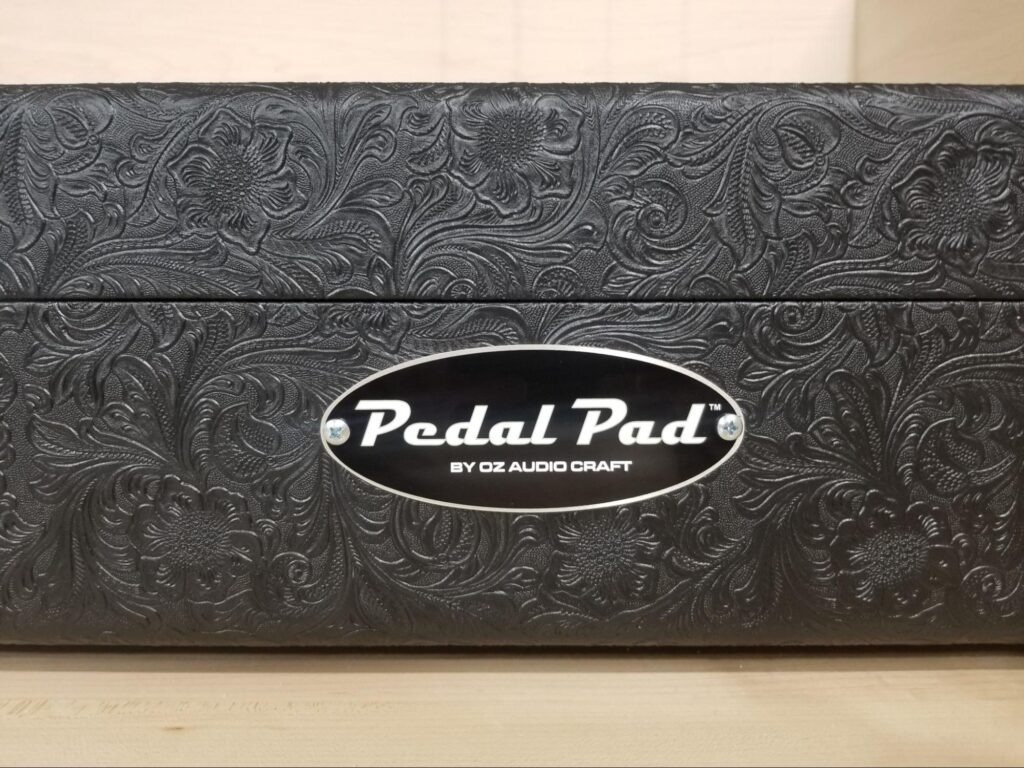
Do you need a pedalboard to put that shiny new guitar compressor pedal on? Give us a call.
At Pedal Pad, we specialize in hand-building custom pedalboards that put your needs as a guitarist first. With a wide variety of different sizes, styles, colors, and finishes, and an almost endless list of optional features like built-in audio in/outs, power switches, and more, the options are truly endless.
Don’t settle for some boring mass-produced board that lacks the convenience, craftsmanship, and functionality you need to craft your unique sound. Contact Pedal Pad and start designing your new dream pedalboard today.