
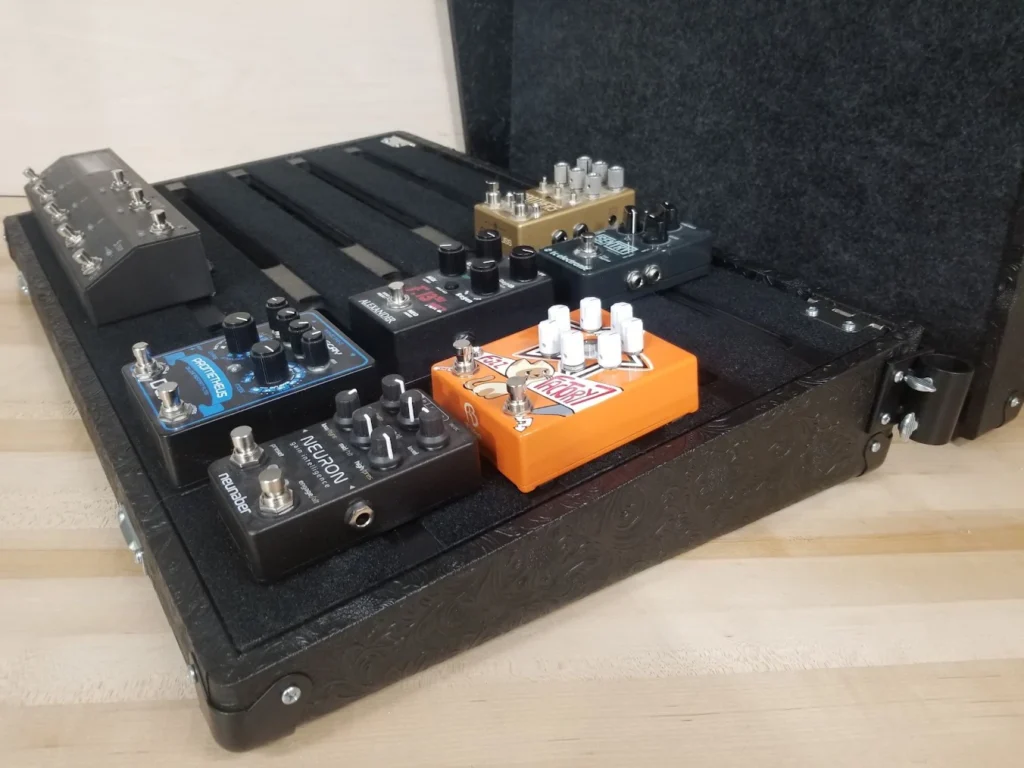
When setting up a new pedalboard for the first time, there’s a lot to consider, including arrangement, your power sources, and more. However, one of the most important factors to prioritize from the start is finding the ideal pedalboard size for you.
Unlike other pedalboard features, pedalboard size is something that can’t be easily adjusted without tearing down your old board and starting a new one from scratch. So, choosing the right size is essential.
At Pedal Pad, we understand just how difficult sizing can be. If you’re planning on setting up a new pedalboard soon, our expert guide is here to help you make the best choice for you and your rig.
Effect pedals come in all sorts of different shapes and sizes, so measuring the equipment you plan to put on your board is always a great place to start. After all, five mini pedals will take up far less room than five large effects, and adding a wah, expression pedal, switcher, or multi-effects unit further complicates things..
One thing to keep in mind is that measuring the pedal depth is just as important as measuring the length and width. Some pedals are taller than others, and though this may not affect the board itself much, it will affect any case or cover that you want to use with it.
You most likely don’t use all your pedals with the same frequency, so you should also think about which pedals actually need a permanent place in your signal chain. If you own effects that only come out for specific songs or when you want to goof around, it might not be worth allowing them to take up permanent real estate on your board.
This also means that solidifying your pedal chain early is another must. You can’t figure out how much room you need if you don’t know exactly which pedals you plan to place on your board. But if you’re still putting your signal chain together, our guide to choosing the right pedals for your playing style can help you narrow down what belongs in your setup.
Pedal dimensions alone aren’t the same as the space a connected pedal will need to occupy. Patch cables and power connections extend beyond the pedal enclosure, which means your finished layout will need a bit more room than your initial measurements suggest.
Before making any final decisions, you should look at where the jacks and power connections are positioned on each effect you plan to put on your board. Top-mounted jacks and even L-shaped patch cables can help you place pedals closer together horizontally, but you’ll still need to make sure that you’re leaving enough space between them.
Planning these connections early goes a long way to helping you choose a pedalboard size based on the actual dimensions that your rig needs. You’ll also have a much easier time keeping cables organized instead of trying to squeeze them into the space you have left.
Your current setup matters most when building a new pedalboard, but that doesn’t necessarily mean it has to be the only setup your board can accommodate. If you’re the type of guitar player that likes to experiment with new effects regularly or you expect your signal chain to change in the near future, leaving some open space is definitely a good idea.
However, that doesn’t mean buying a board dramatically larger than what you need is the right idea either. Too much unused deck space adds unnecessary bulk and can make your board look a bit strange and unbalanced. Still, leaving a practical amount of extra room can give you the extra space you need to add an extra stompbox or two down the line if you want.
The pedals on top of the deck are only part of your setup. Power supplies, power strips, connectors, and cable routing all need somewhere to go, and planning that space can make a major difference in how tidy your finished rig feels.
At Pedal Pad, our hinged-deck pedalboards provide ample storage underneath the playing surface, giving you a dedicated place for power and wiring. However, if you plan on customizing something different, you will need to make sure that there is enough space for your power supplies somewhere, whether it’s underneath or on top of the pedal deck itself.
If you do have space to place your power supplies underneath your board, you’ll still need to think about the dimensions of your power supplies and the wiring that connects them to your pedals. Larger power supplies can be quite big, and depending on how you route everything, you may need even more room than you may have initially thought.
Planning the top and underside together lets you create a board where the whole system works as one unit. Instead of just focusing on where to mount your pedals, planning what needs to go underneath at the same time makes it much easier to be sure that the pedalboard size you choose will be able to accommodate your setup and make it easy to play and experiment the exact way you want to.
Are you ready to bring your dream custom pedalboard to life? Contact Pedal Pad.
At Pedal Pad, we build custom pedalboards to meet all your needs and preferences as a player. Whether you’re looking to add unique built-in features like audio ins/outs and power switches, or just want to make sure that you find the ideal pedalboard size for you, our team is here to make your vision a reality.
Contact Pedal Pad and start building your new dream board today.
Newsletter Sign Up