
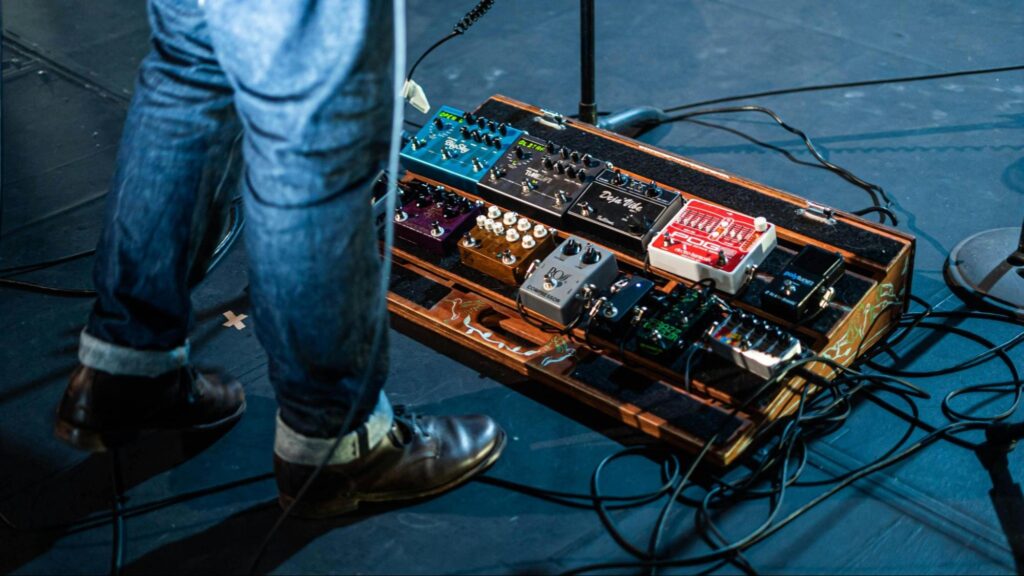
Setting up a new pedalboard can be tricky, and cable management is often one of the toughest parts. With multiple patch cables linking your pedals and several power cables running beneath the board, it’s easy for everything to turn into a cluttered knot if you’re not careful.
The good news is that organizing pedalboard cables can be done with a little planning and the right tools. No matter your level of experience, you can build a layout that stays neat and functions smoothly. Here’s a clear breakdown of what you should know to keep your cables organized and your pedalboard running exactly the way you want.
While cable management may seem like more of an organizational issue than anything else, it’s about a lot more than just keeping your board nice and tidy. Excess cable length, tangled wires, and overlapping audio and power wiring can actually introduce a ton of extra humming, guitar pedal buzzing, and tonal muddiness that can make your playing sound a lot worse than it should.
At the end of the day, proper pedalboard cable management can make or break any guitar rig. From ensuring that the tone stays dialed in to preventing technical issues and simplifying setup and teardown, there’s no doubt that it’s essential for every guitar player to master the art of pedalboard cable management.
Proper pedalboard cable management should start long before you ever touch a cable. Instead, you should start with a clear plan for pedal placement that considers signal chain order and how often you use each pedal, ensuring that your favorite pedals are the easiest to access.
Once you have your plan and know where each pedal will be on your board, you’ll have a much easier time finding the ideal patch cable lengths to connect them. This way, you can ensure that your patch cables are just long enough to connect each pedal without adding excess length and more opportunities for tonal degradation and tangling.
The same goes for your power cables. Once you know where each pedal will be on the board, planning where each power cable will connect to your pedals and the power source becomes much easier, allowing you to avoid any overlap with patch cables and other power wiring.
Once you have a set layout, it’s time to get into the nitty-gritty of proper pedalboard wiring. In addition to using high-quality cables, here are some other essential tips to help you ensure that you get the most out of your board.
While employing the right cable management techniques gets you most of the way there, there are also plenty of pedalboard accessories that guitar players can use to bring their cable management up to the next level.
Zip ties, velcro straps, and cable clips, for example, are all excellent and relatively inexpensive tools that you can use to keep your cables secure and tidy. Power cable organizers, much like the ones someone might use to keep their workplace wiring from getting out of hand, also work perfectly here, ensuring that power cables aren’t a dangling, tangled mess.
Regardless of how big or small your board is, making the meager investment into any of these tools and accessories can go a long way to helping you improve your cable management efforts.
Even the most experienced guitar players and pedalboard builders can make simple wiring mistakes that severely affect the performance of their board. Whether you think you already have a good handle on pedalboard cable management or not, here are a few preventable issues that you should avoid at all costs.
Even if you ignore all of the cable management advice in this article, simply avoiding these common mistakes can significantly improve your board’s performance in an instant.

Are you ready to build your new custom pedalboard?
Our team of expert board builders is always happy to help you design the perfect board to meet your needs, and with so many amazing customization options, the possibilities are endless. Don’t settle for some boring mass-produced board that doesn’t meet your needs. Contact Pedal Pad and take the first step toward getting your dream pedalboard today!